
Ever wonder if gold fits your portfolio as you eye retirement?
It hedges uncertainty and adds stability for investors over 50.
This guide shows how much gold suits your risk and goals.
Try inverse age rule, 100 minus age, or age minus 50.
Why Include Gold in Your Portfolio?
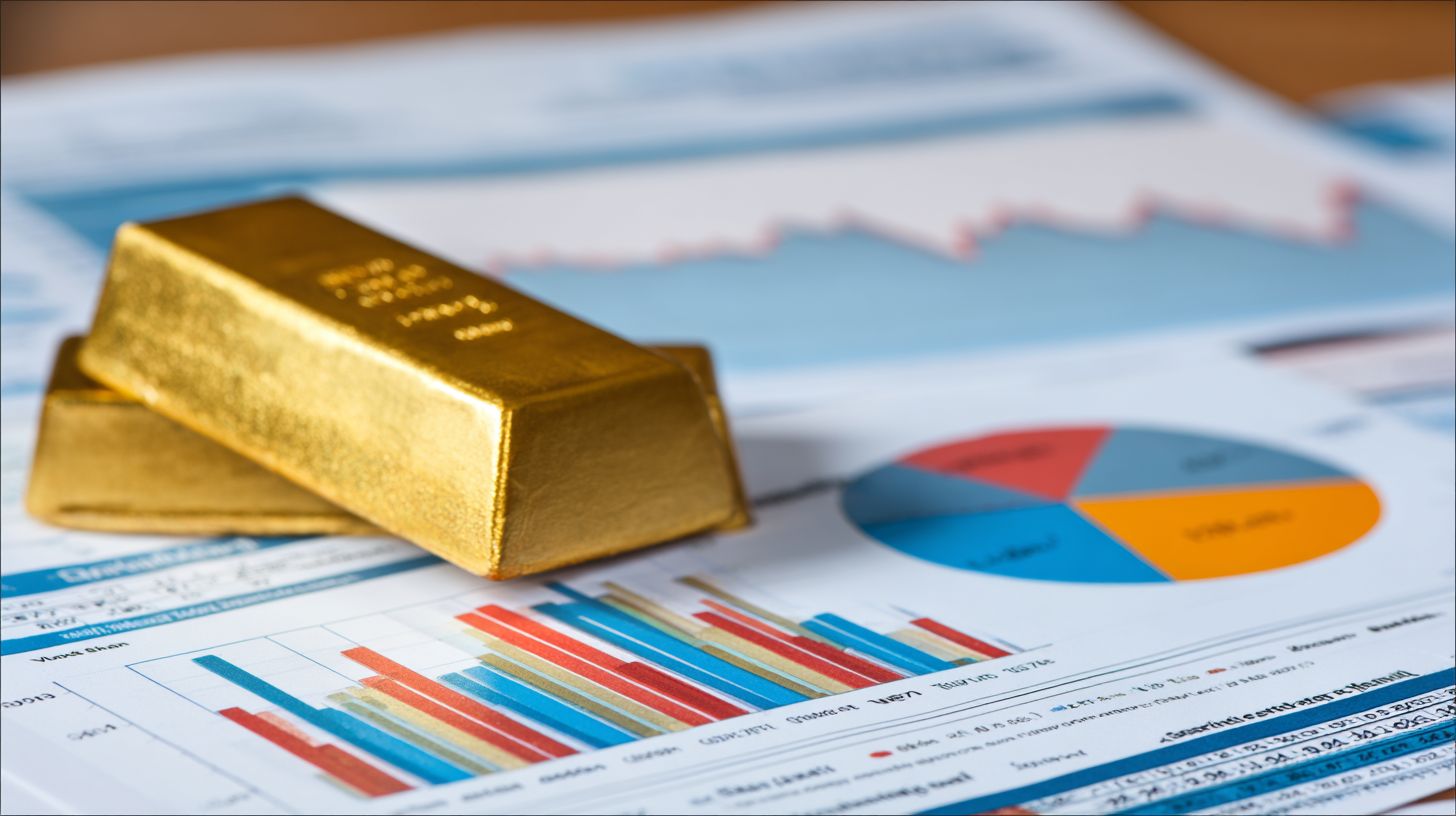
Gold stabilizes portfolios for investors over 50.
It protects savings from market ups and downs and geopolitical risks.
Gold fights currency devaluation and inflation in retirement plans.
Risk-averse folks love it for saving capital.
Get it via physical gold, gold ETFs, mining stocks, or mutual funds.
Gold balances portfolio allocation with stocks, bonds, and cash equivalents.
It boosts your emergency fund and liquidity reserve with steady value.
Match gold to your risk tolerance and age rule.
Buy gradually and rebalance annually to cut storage costs and selling hassles.
Hedge Against Inflation
Gold keeps your buying power when inflation hits housing, food, and consumer goods.
Its value rises with prices.
Savings accounts lose to rising costs.
Gold holds value on its own.
Investors over 50 shield their retirement portfolio this way.
Base allocation on your risk and track inflation.
Use gold ETFs to skip physical gold storage woes.
Diversification Benefits
Gold cuts volatility by diversifying from stocks and bonds.
It steadies returns in market dips.
Perfect for investors over 50 with 5% to 10% in gold.
Gold held strong in crises when stocks tanked.
It balances your portfolio, as Stephan Shipe from Scholar Financial Advising notes.
Precious metals spread risk across assets.
Pair with gradual buying for the 15% to 20% non-income assets strategy.
- Rebalance annually.
- It fits risk averse plans against geopolitical risks.
Gold Allocation in Diversified Portfolios (5-10%): Dr. Stephan Shipe Analysis
#2b93hjzn.bar-container {position: relative;overflow: visible!important;}#2b93hjzn.bar-value {position: absolute!important;left: 50%!important;top: 50%!important;transform: translate(-50%, -50%)!important;color: white!important;font-weight: 700!important;font-size: 14px!important;white-space: nowrap!important;background: rgba(0, 0, 0, 0.7)!important;padding: 4px 12px!important;border-radius: 20px!important;z-index: 30!important;text-shadow: 0 1px 2px rgba(0, 0, 0, 0.3)!important;pointer-events: none!important;display: inline-block!important;}#2b93hjzn.animated-bar {z-index: 1!important;}@media (max-width: 768px) {#2b93hjzn {padding: 16px!important;}#2b93hjzn h2 {font-size: 24px!important;}#2b93hjzn h4 {font-size: 16px!important;}#2b93hjzn.bar-label {font-size: 12px!important;}#2b93hjzn.metric-card {padding: 20px!important;}#2b93hjzn.bar-value {font-size: 13px!important;padding: 3px 10px!important;}}@media (max-width: 480px) {#2b93hjzn {padding: 12px!important;}#2b93hjzn h2 {font-size: 20px!important;}#2b93hjzn h4 {font-size: 14px!important;}#2b93hjzn.bar-label {font-size: 11px!important;margin-bottom: 6px!important;}#2b93hjzn.bar-value {font-size: 12px!important;padding: 2px 8px!important;min-width: 45px!important;text-align: center!important;}#2b93hjzn.bar-container {height: 36px!important;overflow: visible!important;}}
Gold Allocation in Diversified Portfolios (5-10%)
Key Allocation Percentages
Historical Performance of Gold
Gold thrives in tough times over decades.
It’s a top safe haven during recessions and inflation.
Gold shines against geopolitical risks and economic woes.
Grab it now to protect your future!
Think of gold as a long-term store of value.
It’s not for quick profits.
Treat it like a marathon asset that builds wealth over years.
Financial planners recommend it for diversification in retirement portfolios.
For those over 50, gold fits the age rule for risk tolerance.
Pair physical gold, gold coins, gold bars, or gold ETFs with other assets to fight volatility.
- Rebalance every year to keep your ideal mix.
Current Market Factors Influencing Gold

Geopolitical risks and stubborn inflation drive gold demand.
Investors face economic bumps and turn to gold as a safe haven.
Tensions in the Middle East and Eastern Europe spike gold prices fast.
Supply chain issues boost gold’s price trajectory.
Mining disruptions or transport delays cut supply and push prices up.
Labor strikes at big mines have tightened supply and lifted values before.
Central bank policies create market volatility.
Gold stabilizes portfolios when rates shift or currencies weaken.
Investors over 50 watch these changes to guard retirement savings.
Track global tensions and inflation news to time gold exposure.
Dr. Stephan Shipe from Scholar Financial Advising says buy gradually on dips, not at peaks.
- Rebalance yearly to match your risk and portfolio goals.
Recommended Allocation Percentages
By Stephan Shipe, Thursday November 13
Planners suggest 5% to 10% gold in retirement portfolios.
It balances protection and growth.
For a $500,000 nest egg over 50, this fights inflation and volatility.
Conservatives stick to 5%.
Aggressive investors go higher.
Tailor to your risk and savings.
Gold preserves buying power in tough times.
Nearing retirement? Match allocation to your age, but cap precious metals at 10%.
Pair gold with income assets.
- Rebalance annually as prices shift.
- Choose physical gold, gold ETFs, fractional gold, gold mining stocks, or gold mutual funds.
- Watch storage costs, selling hassles, and no income.
See gold as a safe haven for currency drops and global risks.
Conservative Investors
Risk-averse folks over 50 thrive with 5% gold.
It focuses on keeping your money safe.
Pair it with cash equivalents and an emergency fund for liquidity.
Calculate: total portfolio times 0.05.
A $500,000 nest egg means $25,000 in gold.
Start with gold ETFs for easy, cheap access.
Diversify smartly.
Hold little physical gold to skip storage costs.
It guards against inflation in goods, homes, and food.
Keep a buffer for surprises.
- Assess your full portfolio value first.
- Allocate 5% to gold as a safe haven.
- Build an emergency fund covering 6-12 months of expenses.
- Review holdings yearly for rebalancing.
Aggressive Investors
Aggressive investors take up to 10% gold despite volatility.
They grab growth in uncertain times.
This beats conservative 5% by adding exposure against global risks.
Gold pays no income, so mind opportunity costs.
Buy gradually on dips to average costs.
For $500,000, 10% is $50,000 across ETFs and mining stocks.
Watch selling hassles and storage for physical gold.
It balances growth and safety for over-50s.
- Rebalance yearly to dodge too much exposure.
It hedges inflation and currency drops boldly.
Track performance vs. conservatives.
Adjust for your risk and retirement timeline.
Risk Tolerance and Gold Exposure
Check your risk tolerance to set gold exposure.
It’s key as over-50s near retirement.
Gold steadies portfolios in volatility and risks, but pays no income.
Are you ready for gold’s price swings?
A 10% gold ETF drop in a month stresses some out, says Dr. Stephan Shipe on Thursday November 13.
Fit gold into stocks and bonds for diversification.
Answer key questions for self-check.
Think about no-income costs, physical storage, and selling friction.
- OK with no-income assets like mining stocks or precious metals funds?
- Does gold’s protection beat volatility fears?
- Got cash emergency fund first?
Talk to planners like Dr. Stephan Shipe at Scholar Financial Advising.
They customize gold for your savings and income needs.
Age-Based Allocation Guidelines

Try 100 minus age or age minus 50 for gold starts.
Younger folks get more for growth.
Older shift to safety and stability.
Over 50? Use 120 minus age for gold, cap it.
It fits shorter timelines with income and liquidity needs.
A 55-year-old: 120 minus 55 = 65% stocks, room for 10-15% gold.
Cut if low risk; prioritize cash first.
Factor your savings and volatility worries.
Integrate gold for diversification vs. inflation and risks.
Use physical, ETFs, stocks, or funds; mind costs.
- Rebalance annually despite no income.
Adapting the Inverse Age Rule for Precious Metals
Adjust inverse age rule for gold’s no-income volatility.
Young: 10-20% to hedge currency and economy.
Older: protect buying power vs. rising costs.
Subtract age from 110 for gold target.
Refine for goals; pair with growth assets.
Example: 40-year-old does 70% equities, 15% gold.
At 60: 50% equities, 20% gold.
- Buy gradually on dips for risk-averse stability.
Calculation Examples for Investors Over 50
Over 50: 110 minus age for stocks, 5-10% gold.
60-year-old: 50% stocks, 10% gold, rest bonds/cash.
65-year-old moderate risk: 5% gold ETFs, 2% mining stocks = 7% metals.
Fits income-focused retirement.
- Keep liquidity high.
High volatility fear? Cap at 5%.
Tweak for emergency fund; rebalance yearly.
Adjusting for Risk Tolerance and Income Needs
Risk tolerance beats formulas.
Conservatives over 50 cap gold at 5%; strong savers hit 10%.
- Build emergency fund first.
Gold yields nothing, so add dividend stocks.
Risk-averse pick gold ETFs over physical for low costs and easy sales.
Get planner help if growth counts.
Use dollar-cost averaging on dips.
Gold vs. Other Assets Comparison
Gold beats cash and savings on inflation protection.
Bonds and stocks grow; gold stabilizes in volatility.
Over-50s love it for saving capital in tough economies.
Physical gold and ETFs need less instant liquidity than emergency funds.
Savings lose to currency drops; gold holds for goods, homes, food.
Gold sales have spreads or fees, unlike bonds.
But in risks, gold shines when stocks fall.
Planners push it for risk-based diversification.
| Asset | Liquidity Reserve | Storage Costs | Selling Friction | Unique Value |
|---|---|---|---|---|
| Gold | Moderate; physical needs secure storage | High for physical gold; low for ETFs | Medium; spreads or fees apply | Portfolio stabilizer against inflation, volatility |
| Bonds | High; easy to sell | None | Low; market-driven | Income stream, but sensitive to rates |
| Stocks | High in liquid markets | None | Low; brokerage fees | Growth potential, high volatility |
| Emergency Fund (Cash) | Immediate access | None | None | Safety net, no inflation protection |
Gold wins in retirement planning.
Aim 5% to 10% for balance if risk-averse.
Tax Implications of Gold Ownership

Know tax rules for physical gold vs. ETFs to max after-tax gains.
Physical coins/bars are collectibles with high taxes.
Long-term physical gold hits up to 28% tax.
ETFs/stocks get 0-20% capital gains.
Short-term uses income rates, often high for over-50s.
Hold long-term for best rates.
Physical adds storage and selling hassles.
Sell American Eagle coins after 2 years vs. GLD ETF.
Dr. Stephan Shipe says ETF wins after taxes.
- Get professional tax advice for your setup.
Monitoring and Rebalancing Your Gold Position
By Stephan Shipe, Thursday, November 13
Regular monitoring and annual rebalancing keep your gold allocation on track with market changes and your goals.
Gold stabilizes your portfolio against inflation and volatility, but its share can drift over time.
Investors over 50 often aim for 5-10% in precious metals.
This boosts diversification and protects capital.
- Check your gold position every quarter.
- Spot drifts from your target, especially during geopolitical risks or currency drops.
If physical gold or ETFs exceed 10%, trim back to match your risk level.
Use simple tools for 30-minute reviews.
- Hold a 1-2 hour session annually to rebalance.
- Sell excess in dips or buy gradually if you’re risk-averse.
Plan sales around taxes and liquidity.
Factor in storage costs for physical gold in your retirement choices.
Track allocations with portfolio apps or spreadsheets alongside stocks, bonds, and cash.
Build these habits for income replacement and emergency protection.
Gold then serves as a true safe haven.
Avoid overexposure and lost growth chances.
Step-by-Step Rebalancing Process
Gather statements for all assets like gold ETFs, mining stocks, and physical gold.
Calculate current percentages vs. your 5-10% target in 15 minutes.
- Check triggers. Sell if gold tops 10% from rises in consumer goods or housing.
- Choose actions. Sell high or buy low slowly. Keep income assets from being crowded out.
- Make trades. Use brokers for ETFs or dealers for physical gold. Expect 30-60 minutes.
- Log updates. Refresh your tracker for retirement targets.
- Repeat yearly or after major events like economic shocks.
- Over-50 investors need this to guard purchasing power.
Common Triggers for Rebalancing
Drift from your 5-10% target triggers action most.
Gold surges in inflation or volatility.
At 12%, rebalance risk-averse portfolios to unlock growth elsewhere.
Adjust for age as retirement nears.
Geopolitical risks or currency falls spike gold fast.
Rebalance if it doubles vs. stocks to cut safe-haven dependence.
- Quarterly checks catch issues early.
- Act now to stay balanced!
- Gold beats baseline by 5% or more.
- Portfolio shifts from income or liquidity needs.
- Storage costs climb for physical gold. Time to trim!
Managing Costs and Friction
Selling physical gold faces dealer spreads and taxes.
Time sales for low-tax years to protect your portfolio.
Gold ETFs beat bars or coins for liquidity.
Switch for easier moves.
Physical gold storage costs more than ETFs or funds.
Weigh this in rebalancing.
Overweight gold misses income chances.
Pair it with cash for emergencies.
Use free apps or Excel for fast tracking.
Keep gold practical for diversification.
Dodge hidden costs that eat your savings.
Stay sharp and save big!